

The Intelligent Kitchen: How AI Is Changing Foodservice
- November 1, 2026
- Posted by: Sheryl Yong
- Category: International
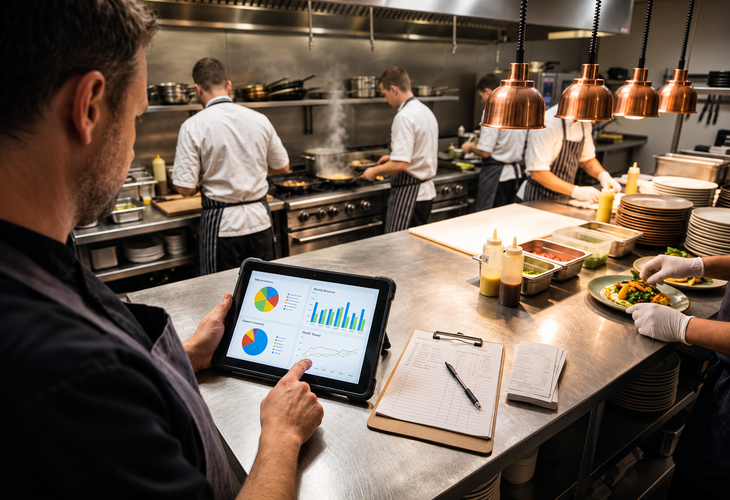
The hospitality industry is navigating an increasingly challenging operating environment. Rising ingredient costs, persistent labour shortages and tightening profit margins are prompting foodservice operators to rethink how their kitchens function. While maintaining culinary standards and guest satisfaction remains essential, greater emphasis is now being placed on operational efficiency, consistency and profitability.
Artificial Intelligence (AI) is emerging as a valuable operational partner in commercial kitchens. By integrating technologies such as machine learning and computer vision into everyday workflows, operators can turn operational data into actionable insights, enabling more informed decisions across food preparation, workforce planning and menu development.
Removing Guesswork: Demand Forecasting and Waste Reduction
Historically, purchasing and food preparation decisions have relied heavily on managerial experience, intuition and historical sales patterns. However, inaccurate forecasting can result in overproduction, unnecessary waste, stock shortages and lost revenue. AI-powered forecasting tools offer a more precise approach by analysing point-of-sale transactions alongside external factors such as weather conditions, local events and public holidays to better anticipate demand.
Beyond forecasting, computer vision technologies such as Winnow Vision are helping commercial kitchens identify and reduce food waste. During Hilton Hotels’ Green Ramadan 2025 initiative, 45 properties across 14 countries, including Malaysia, used AI-enabled waste tracking alongside operational improvements, achieving a 26% reduction in plate waste. Similarly, IKEA Commercial Food Services implemented Winnow’s technology across its UK and Ireland operations, reducing food waste by approximately 50% and generating more than £1.4 million in savings.
These examples demonstrate how data-driven insights can help operators identify inefficiencies, improve inventory management and reduce avoidable costs while supporting sustainability objectives.
Smarter Labour Planning and Automated Scheduling
Labour remains one of the largest expenses in foodservice. Overstaffing during quieter periods increases operating costs, while understaffing during peak hours can affect service quality and employee morale. AI-enabled workforce management systems can help operators forecast customer demand, optimise scheduling and allocate labour more effectively.
At an enterprise level, Starbucks has been exploring how AI can support operational efficiency through its Deep Brew technology and broader digital initiatives. The company has highlighted opportunities to improve inventory planning, demand forecasting and workforce scheduling, while using AI-powered tools to simplify routine tasks and support frontline employees.
For foodservice operators, the value extends beyond cost savings. By reducing time spent on repetitive administrative activities and improving resource allocation, technology can allow managers to focus more on team development, service consistency and customer engagement.
Understanding Diners: AI-Driven Menu Engineering and Trend Analysis
Menu engineering requires a careful balance between consumer preferences, ingredient costs, preparation time and contribution margins. As dining trends evolve, AI is enabling operators to move beyond periodic menu reviews towards more responsive, data-informed decision-making.
Consumer intelligence platforms such as Tastewise analyse large volumes of data from social media, digital menus and other food-related sources to identify emerging flavours, ingredients and dining preferences. These insights allow culinary teams to better understand changing consumer interests and identify opportunities for menu innovation.
When combined with internal sales and cost data, AI-driven insights can also support menu engineering by identifying product performance, ingredient cross-utilisation opportunities and potential improvements in profitability. This enables operators to introduce relevant menu offerings while managing kitchen complexity and operational costs.
The Human Element: Where Judgment Must Lead
Despite its operational advantages, AI delivers the greatest value when complementing human expertise rather than replacing it. Research discussed by Harvard Business School highlights both the capabilities and limitations of AI, reinforcing the importance of human judgment. While AI can support data analysis, inventory planning and demand forecasting, culinary creativity, sensory evaluation and hospitality remain dependent on human expertise. Chefs bring flavour and craftsmanship, while managers and frontline teams provide the adaptability, empathy and leadership essential to memorable dining experiences.
The real opportunity lies in using AI to reduce repetitive administrative tasks and improve operational visibility, allowing employees to focus on food quality, team development and guest engagement. As technology evolves, the intelligent kitchen will be defined not by automation alone, but by how effectively operators combine data-driven insights with human capabilities. Ultimately, the future of foodservice is not about replacing people with AI, but empowering them to operate more intelligently, efficiently and consistently.
By: Javier Tan